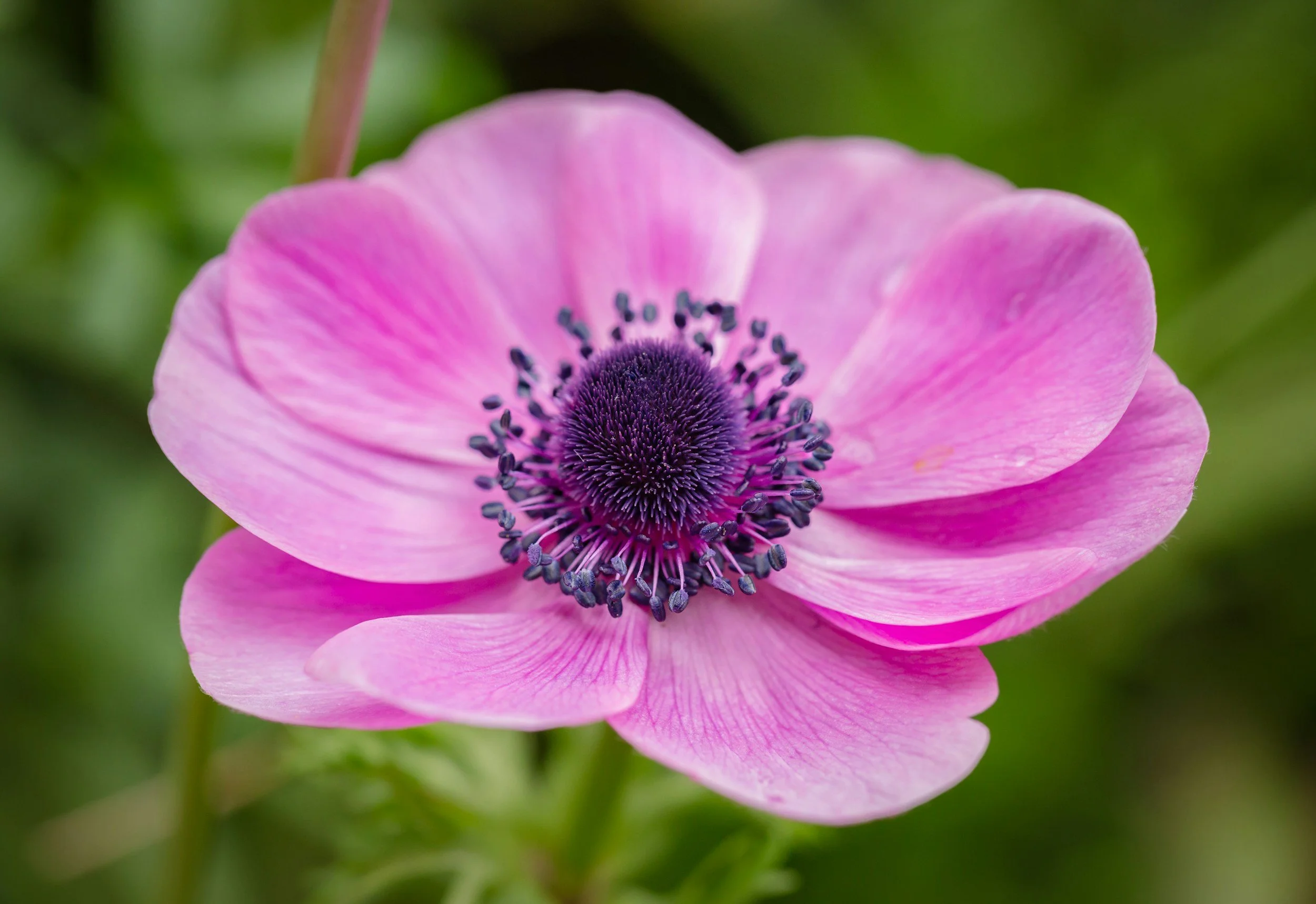
Anemone
Last weekend I planted ranunculus corms and anemones into the garden box, and sweet peas in the bed. This week the seeds go in. It’s November, and the flowers I’m planting now won’t be in anyone’s bouquet until spring. But that’s how the wedding and event season starts. The work happens months in advance.
Why plant in the fall
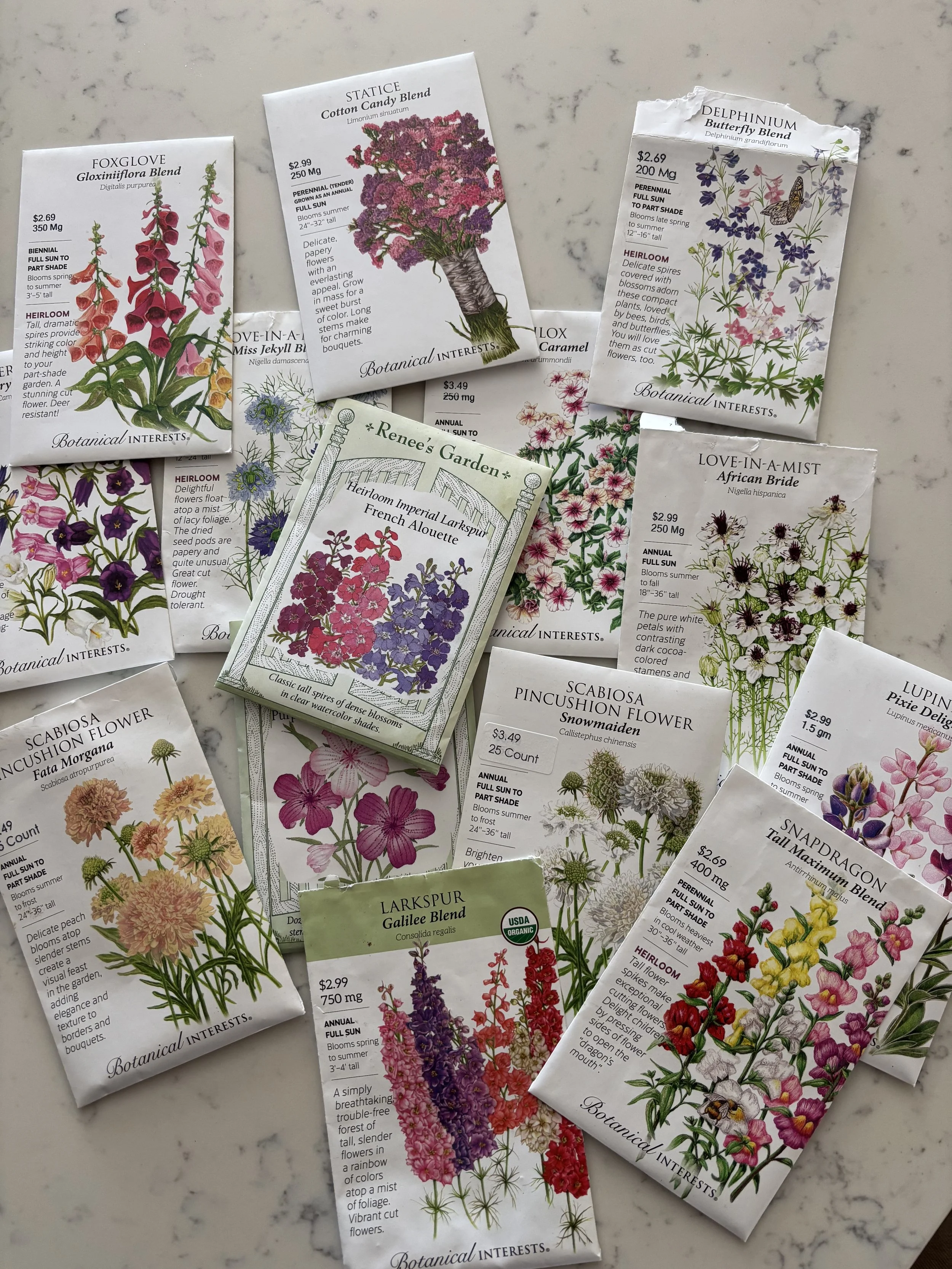
Seeds
Cool-season flowers do their best work when they get a head start. Seeds sown now germinate in the cool, damp weather and spend the winter building strong roots. In spring they take off and bloom earlier, taller, and fuller than anything sown after the last frost. For a florist, that means flowers in April and May, right when wedding season starts. However, we are expecting a super El Nino this winter which means a heavy raining season, and it could mean a garden full of beautiful flowers in the spring or a flooded garden bed. We will have to wait and see what happens.
What’s going in the ground
Spikes and structure: larkspur, delphinium, snapdragons, lupine, foxglove
These are the line flowers that give arrangements height and movement.
Airy texture and fillers: nigella, agrostemma, phlox, Canterbury bells
These are the flowers that make a bouquet look full and abundant. Nigella’s feathery foliage and seed pods and phlox’s delicate blooms are some of my favorites.
Everlasting and fragrance: statice, scabiosa, sweet peas
Statice dries beautifully for keepsakes, scabiosa adds a soft, romantic shape, and the scent of sweet peas reminds us of a spring wedding.
*note: Canterbury bells and foxglove are biennials which means they won’t flower until the second year.
A few direct-sowing tips
Prep the bed first. Loosen the soil, pull weeds, and mix in compost.
Mind the light. Some seeds, including snapdragons, foxglove, and delphinium, need light to germinate, so press them onto the surface or cover them barely.
Give big seeds a head start. Soak sweet peas and nick or soak lupine before sowing.
Sow a little thick. Thin later, and keep the thinnings for filler.
Protect the beds. Water gently, and watch for birds and slugs. I use row cover to cover the beds from the critters and place eggshells around young plants to deter slugs.
Trellis support (sweet peas). Use wood or metal posts and attach metal fencing for flowers to climb up.
Why I grow flowers for my events
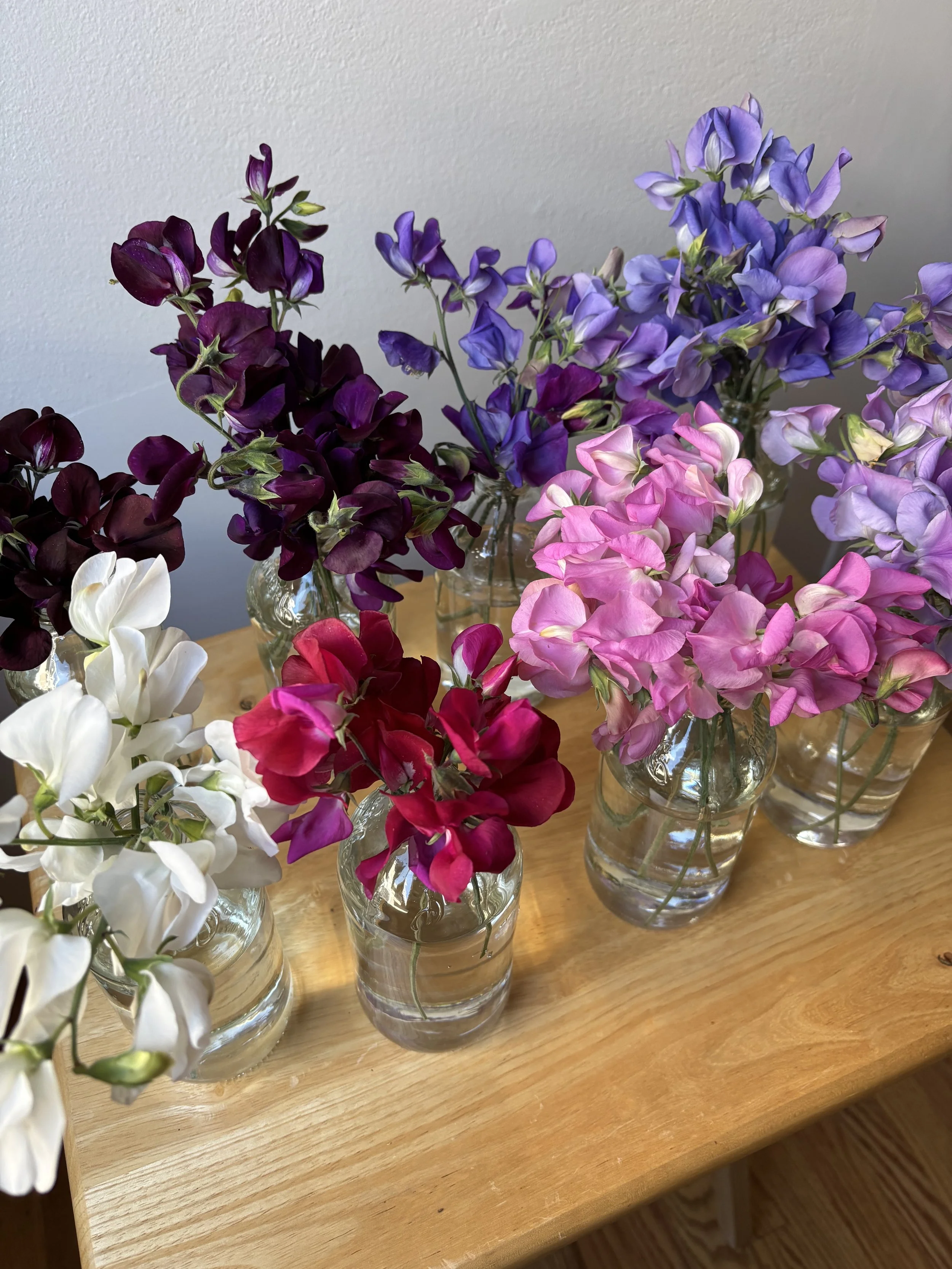
Sweet Pea
Locally grown flowers are fresher and last longer in the vase. Couples love knowing their flowers were grown nearby, and there’s less packaging and fewer miles behind each stem. And sustainability is at the forefront of my business.
I’ll be honest: I won’t and I can’t grow everything. Certain classic blooms will still come from my wholesale partners. But the flowers from my own beds are the ones that make an arrangement feel special because I grew them.
What’s next
Over the winter I’ll be watching for seedlings and protecting the beds from critters and cold nights. I’ll share updates as things sprout, and I’ll post the bloom timeline so couples can see what might be available for their dates.
If you’re planning a 2027 wedding or event and love the idea of locally grown flowers, get in touch here. And if you’re a gardener, tell me what you’re sowing this fall.
Seed list:
ranunculus: elegance alba bianco, amandine pastel mix
anemone: sylphide, mr fokker
larkspur: galilee blend, french alouette
delphinium: butterfly blend
snapdragon: tall maximum blend
lupine: pixie delight
foxglove: gloxiniiflora blend
nigella: african bride, miss jekyll blend
agrostemma: purple queen & pink contessa
phlox: cherry caramel
canterbury bells: storybook blend
statice: cotton candy blend
scabiosa: fata morgana, snowmaiden
sweet peas: mammoth mix